Xenith Steel
Xenith Steel
For deep oil and gas wells requiring API 5CT casing with guaranteed J55 through Q125 yield strength (379-862 MPa per Table C.3), the thread connection integrity under combined tension and burst loading determines string design life. Unlike OCTG tubing that handles production flow, casing must withstand formation collapse pressure during cementing and completion — a distinction that drives wall thickness selection for each string section. Xenith Steel provides full MTC traceable casing from our Cangzhou facility to major operators including CNPC and Sinopec, with third-party inspection by SGS or BV.
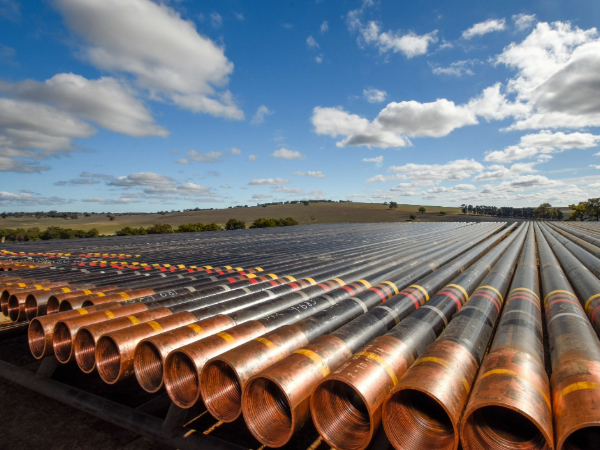
API 5CT casing pipe threaded and coupled end finish
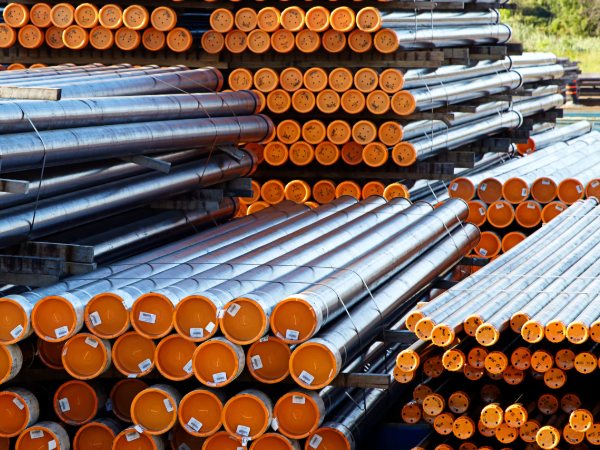
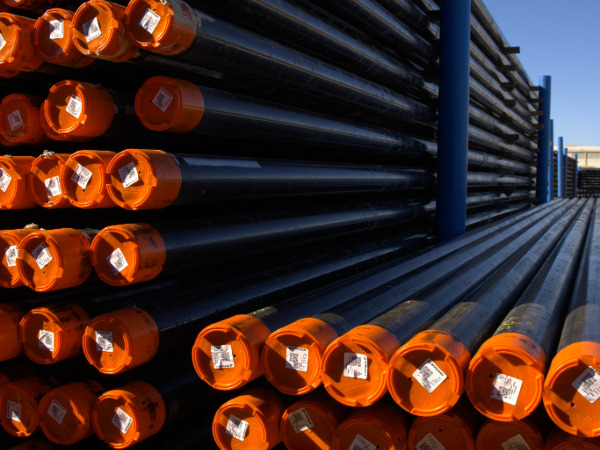
Oil well casing pipe steel bundle yard storage
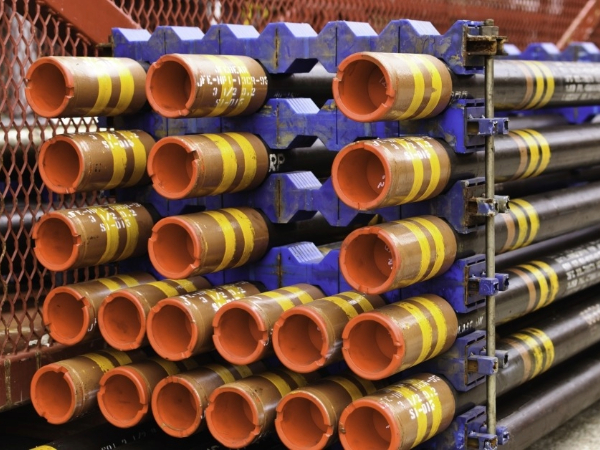
Casing pipe coupling and thread protector close up
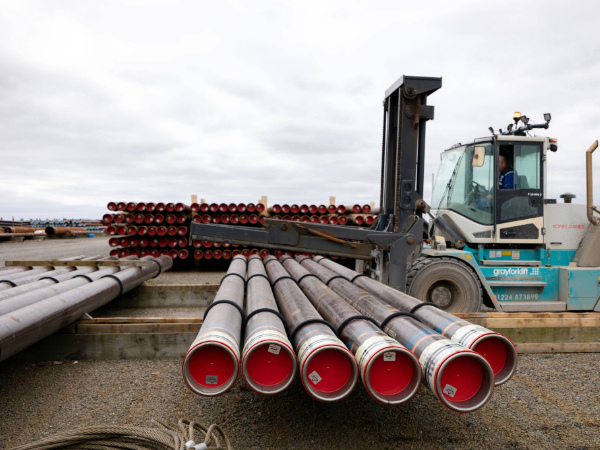
Large diameter steel casing pipe for oil well
API 5CT casing pipe end face bevel preparation

Casing Pipe

Product: Casing Pipe, Oil Casing, API Casing, Well Casing, Casing
Application: Used for oil casing and tubing in oil wells as well as sidewall
Size: OD: 114.3mm-508mm
WT: 5-16mm
LENGTH: R1, R2, R3
Pipe Standard: API 5CT PSL1/PSL2  J55,K55,N80-1,N80-Q,
API 5CT PSL1/PSL2  L80-1, L80-9Cr,L80-13Cr,C90, C95, P110, Q125
Thread: NUE, EUE, STC, LTC, BTC, XC,HYDRILL CS
Special Service Sweet Service, Sour Service, Anti-H2S, NACE MR0175/ISO15156
Accessories: Pup Joint, Coupling, Drill Collar, Crossover etc.
  • Products details
  • Tolerance table
  • Chemical composition
  • Specification

OCTG Casing Introduction

Product:

Casing Pipe, Oil Casing, API Casing, Well Casing, Casing

Application:

Used for oil casing and tubing in oil wells as well as sidewall

Size:

OD: 114.3mm-508mm

WT: 5-16mm

LENGTH: R1, R2, R3

Pipe Standard:

API 5CT PSL1/PSL2  J55,K55,N80-1,N80-Q,

API 5CT PSL1/PSL2  L80-1, L80-9Cr,L80-13Cr,C90, C95, P110, Q125

Thread:

NUE, EUE,  STC, LTC, BTC, XC,HYDRILL CS

Special Service

Sweet Service, Sour Service, Anti-H2S, NACE MR0175/ISO15156

Accessories:

Pup Joint, Coupling, Drill Collar, Crossover etc.


Oil casing

R1

R2

R3

4.88-7.62m

7.62-10.36m

10.36-14.63m


OCTG Casing Pipe Connections

API 5CT is applicable to following connections which complied with API SPEC 5B:

• SC: Short round thread casing

• LC: Long ound thread casing

• BC: Buttress thread casing

• NU: Non-upset tubing

• EU: External upset tubing

• IJ: Integral tubing connections


Steel Casing Pipe Application

1, API SPCE 5L For the function of transport of gas, water, oill in oil & gas sector.
2, API SPEC 5CT Tubes is used in drawing out oil & gas. casing pipe works as wall surface of well.
3, ASTM A106 For the objective of the pipeline task of central heating boiler, water & oil.
4, ASTM A53 It is made use of for sharing water, petroleum, gas as well as various other typical liquids.
5, ASTM A179 For tubed warm exchanger and also similar warm sharing equipments.

6, ASTM A192 For manufacture wall panel, economizer, reheater, superheater and vapor pipe of central heating boilers.


More casing pipes and their colors

  • Process

Casing pipe manufacturing process includes steelmaking, continuous casting, hot rolling, heat treatment, and quality inspection.

  • Tests
Quality Control System
1. In order to ensure that the original and auxiliary materials used are qualified products, the company evaluates and selects qualified suppliers according to GB/T19001-2000-ISO9001:2000 and API standards. Inspected by the raw material inspector of the Quality Management Department, unqualified raw materials and accessories may not be put into use.
2. Casing pipe diameter test: This test is used to detect the straightness of the pipe body and detect whether there is a bump in the pipe wall.
3, Quality inspection is for the finished product testing, quality inspection staff need to check to ensure that the product has no obvious defects and all the tubes are in compliance with the required parameters and length.
4. Tubing collar size and appearance inspection: QC staff inspects the size and surface of the steel pipe to ensure compliance.
5. Hydrostatic test: The pipe body will be rolled into the hydrostatic tester and water will be injected into the pipe body to ensure that the pipe body can withstand the internal water pressure and ensure that the pipe body does not leak.
6. Physical and chemical analysis of casing collar: This test is used to analyze the chemical composition, mechanical properties, and metal structure of the raw materials in the pipe.
7. Casing pipe thread test: The production personnel will physically inspect the thread after the yarn stage in the production process to ensure compliance.
  • Packing & Delivery
Casing pipes are bundled with steel strips, wrapped with waterproof plastic bags, and loaded into containers or bulk vessels.
  • Tolerance table

API 5CT Casing Pipe Dimension Tolerance

Types of steel tubes

Outer Diameter

Wall Thickness

Cold-rolled tubes

Tube sizes(mm)

Tolerances(mm)

Tolerances(mm)

<114.3

±0.79

-12.5%

≥114.3

-0.5%,+1%

  • Chemical composition

API 5CT Casing Pipe Chemical Compositions

Standard

Grade

Chemical compositions(%)

API SPEC 5CT

J55

C

Si

Mn

P

S

Cr

Ni

Cu

Mo

V

K55

0.34~0.39

0.20~0.35

1.25~1.50

≤0.020

≤0.015

≤0.15

≤0.20

≤0.20

/

/

N80

0.34~0.38

0.20~0.35

1.45~1.70

≤0.020

≤0.015

≤0.15

/

/

/

0.11~0.16

L80

0.15~0.22

≤1.00

0.25~1.00

≤0.020

≤0.010

12.0~14.0

≤0.20

≤0.20

/

/

P110

0.26~0.395

0.17~0.37

0.40~0.70

≤0.020

≤0.010

0.80~1.10

≤0.20

≤0.20

0.15~0.25

≤0


API 5CT Casing Pipe Mechanical Properties

Grade Type Total elongation under load (%)
Yield strength (min)
Yield strength (max)
Tensile strength min Mpa
Hardness Max (HRC)
Hardness Max (HBW)
J55 - 0.5
379 552 517

K55 - 0.5
379 552 655

N80 1 0.5
552 758 689

N80 Q 0.5
552 758 689

L80 1 0.5
552 655 655 23 241
L80
9Cr 0.5
552 655 655 23 241
L80
13Cr 0.5
552 655 655 23 241
C90 - 0.5
621 724 689 25.4 255
C95 - 0.5
655 758 724

T95 - 0.5 655 758 724 25.4 255
P110 - 0.6 758 965 862

Q125 All 0.65 862 1034 931

Frequently Asked Questions

1. A 4,200m HPHT well with 3% H₂S — P110 or L80-1?

P110 yields 758 MPa per API 5CT Table C.3 but max 32 HRC per Table E.2 — that fails the NACE MR0175/ISO 15156 SSC threshold (≤250 HV10 per Section 5.2). L80-1 is Q&T with temper ≥621°C, max 23 HRC per Table E.2, passes NACE TM0177 Method A at 80% SMYS (28 ksi threshold).

For 4,200m, collapse load ~2,000 psi: 7" 26 lb/ft L80 collapse = 3,570 psi per API 5C3 Section 2 (D/t=22.3, plastic regime), design factor 1.79 > minimum 1.125. L80-1 is the call, or upgrade to C95 (26 HRC max) if collapse margin drops below 25%.

2. 7" 26 lb/ft vs 29 lb/ft N80 — how much collapse do you lose for 3 lb/ft lighter?

26 lb/ft: WT 0.362", D/t=22.3, plastic regime per API 5C3 Section 2, collapse = 4,610 psi. 29 lb/ft: WT 0.408", D/t=19.7, collapse = 5,590 psi. Difference: −980 psi (−17.5%).

Cost side: 3 lb/ft × 4,200m × 3.28 = 41,328 lb = 20.7 tons, at ~$1,200/ton that's ~$24,800 saved. If the well's collapse design factor ≥1.125 is satisfied with 4,610 psi (max allowed CMAP ~4,098 psi), 26 lb/ft is adequate. If not, you need 29 lb/ft — that $24,800 is your insurance against a $200k+ casing failure.

3. BTC at 70% make-up torque stalled — what went wrong?

BTC 7" 26 lb/ft N80 spec make-up torque: ~3,450 ft-lb per API RP 5C5 Table A.3. Stall at 70% (2,415 ft-lb) means thread galling — metal-to-metal friction exceeded available torque.

Three usual suspects:

(1) Coupling compound lacks 60–75% Zn dust per API Bul 5A2 — dry dope halves the make-up efficiency.

(2) Thread damage from handling — check taper with API plug gauge, tolerance is +0.003/‑0.000 in/in per API 5CT Section 6.2.

(3) Cross-threading from misaligned stabbing.

Fix: clean threads, fresh Bul 5A2 compound, torque-turn monitoring per API RP 5C5. If it still stalls below 90% of spec torque, that coupling is scrap — rethread or replace.

4. Which three numbers on the MTC confirm you actually ran API 5CT tests?

(1) Hydrostatic test pressure per Table E.4 — 7" 26 lb/ft N80 must hold 0.6 × internal yield = 4,716 psi minimum for ≥5 seconds. MTC shows the actual hold pressure and duration.

(2) Hardness per Table E.2 — N80-Q max 25 HRC, with all three readings per coupling end reported. If they cluster at 22–24 HRC, that heat treatment was controlled.

(3) Wall thickness per Table C.2 — 7" 26 lb/ft nominal WT 0.362", tolerance −5% (0.344") to +10% (0.398"). MTC must show min/max per joint. If min WT is 0.350", you're compliant. Anything below 0.344" is a reject per Table E.4 — and if the MTC doesn't report it, they skipped the measurement.

5. How do you keep a 12m P110 quench uniform from end to end?

API 5CT Section 7.6 demands ±14°C uniformity across the full furnace length. P110 is austenitized at ≥900°C then water-quenched at minimum 30°C/s per mm of wall. For 7" 26 lb/ft (WT 0.362" = 9.2mm), the critical cooling rate is ~3.3°C/s — that's handled by a 6-zone accelerated spray quench with independent flow control.

Tempering at 650–700°C is held ≥1 hour per 25mm of cross-section per API 5CT §7.6. Verification: HRC at both ends and mid-body must all fall ≤32 HRC. You'll often see ends at 26–28 HRC and body at 30–32 HRC — that's normal end-quench effect and still within Table E.2. If any reading exceeds 32 HRC, the temper cycle was insufficient.

6. 400 joints of P110 sat on a coastal yard for 8 months — still good to run?

API 5CT Section 14 says any casing stored >6 months must be reinspected before running. The protocol:

(1) Drift test — API mandrel 6" long for ≤8.625" OD must pass full length.

(2) Threads — visual + gauge check, accept if no cuts, tears, or corrosion pitting deeper than 0.1mm.

(3) OD surface pits ≤0.1mm per Table E.4 are acceptable; anything deeper than 0.2mm is a reject or downgrade.

Real risk: coastal salt spray carries 10–50 mg/m³ NaCl. The varnish coating drops from 15–25μm to roughly 10–12μm after 8 months of exposure, giving a pitting rate of 0.05–0.15 mm/year. If no VCI paper was used, expect some pitting.

Practical plan: 100% drift, 50% thread inspect, spot UT on the worst-looking joints. Cost runs ~$10/joint — cheap compared to a $50k+ fishing job if one parts in the hole.