Xenith Steel
Xenith Steel
Hydraulic cylinders don't tolerate average pipe. Bore tolerance of 0.005\" vs standard pipe's 0.020\" decides whether seals last 5000 hours or 500. That difference comes from the cold-draw process: DOM tubing pulls the OD through a die at 15-25% reduction, aligning grain structure and squeezing the ERW weld seam to under 0.1mm — functionally invisible at the ID. For ASTM A513 Type 5 DOM in 4130 alloy, yield strength reaches 75 ksi after cold work, but through-wall hardness variation of 10-15% means the softer ID layer must be honed 0.5-1.5mm for cylinder barrels. Surface finish matters as much as dimensions: Ra ≤ 0.4μm for 3000+ PSI service vs Ra ≤ 0.8μm for standard, because every micron of roughness accelerates seal wear by roughly 15%. Xenith Steel supplies DOM, seamless, and ERW mechanical tubing from Cangzhou mills with 100% ECT per ASTM A1016, straightness ≤ 1mm/m, and MTC 3.1 traceability.
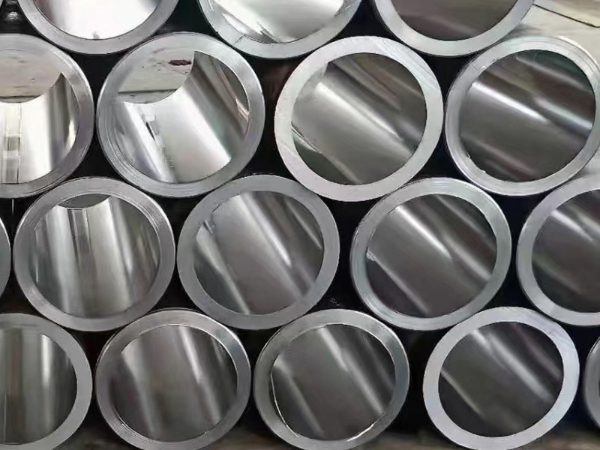
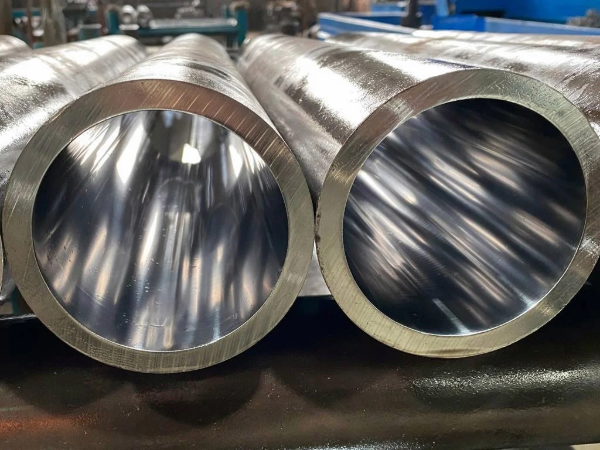
DOM tube for hydraulics
Cold drawing process
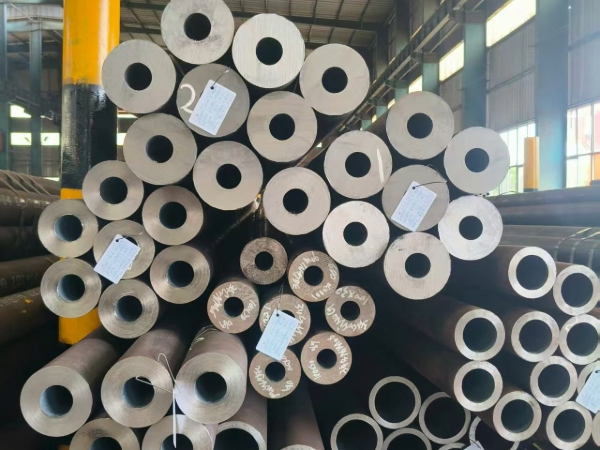
Mechanical pipe cut lengths

Mechanical Steel Pipe

Square

From 0.500” to 2.500”

Rectangle

From 1.000” x 0.500” to 4.000” x 2.000”

Round

From 0.125” OD to 26.000” OD

Custom Shapes (Must be large quantities)

  • Products details
  • Tolerance table
  • Chemical composition
  • Specification

Mechanical Tubing Sizes

Square

From 0.500" to 2.500"

Rectangle

From 1.000" x 0.500" to 4.000" x 2.000"

Round

From 0.125" OD to 26.000" OD

Custom Shapes (Must be large quantities)


Hydraulic Steel Tubing

  • Seamless (SAE J-524)
  • Welded (SAE J-525)

Main material:
Lining: stainless steel, duplex steel, nickel base alloys, titanium, copper and other corrosion resistant alloys.
Product Features:
Using patented technology to make two kinds of interference materials, to ensure the working state of the medium in the corrosive environment, to meet the pressure requirements, greatly reducing the cost of materials, and at the same time has a great binding force

  • Packing & Delivery
  • Chemical composition

Chemical Composition of Mechanical Steel Pipe

Chemistry

%

Carbon

0.06 - 0.018 Max

Manganese

0.30 - 0.60

Phosphorus

0.040 Max

Sulfur

0.050 Max

  • Tolerance table

Mechanical Properties

Yield
(PSI)

Tensile
(PSI)

Hardness
(Max HRB)

Elongation
(in 2" Min)

25,000

45,000

65

35%

  • Process

Seamless hydraulic tubing is produced as a seamless tube by rolling and piercing bar stock.  It then gets multiple cold-drawing reductions before a final cold draw guarantees tight dimensional tolerances and excellent surface finish.  After final sizing of the tube through cold drawing it undergoes intermediate annealing and a dead-soft annealing process to meet SAE J524 requirements.


Welded hydraulic tubing is made from flat-rolled steel shaped into a tubular form where the edges are joined and fused together by electric-resistance welding.  After forming and welding, the tubing is then normalized and subjected to a cold-drawing operation.  Following cold working, the tubing is then normalized via an atmospherically controlled method to produce a finished product that will meet requirement of SAE J525.

  • Tests

Test Requirements of Mechanical Steel Tube

  • Eddy Current Test
  • Ultrasonic Testing
  • Hydrostatic Tests
  • Metalography Test
  • MP / DP / RF ECT Testing
  • BHN Hardness & Rockwell Testers
  • Visual Inspection, TPP and CVN Impact Testing
  • Packing & Delivery
  • Tolerance table

Chemical Composition of Mechanical Steel Pipe

Chemistry

%

Carbon

0.06 - 0.018 Max

Manganese

0.30 - 0.60

Phosphorus

0.040 Max

Sulfur

0.050 Max

  • Chemical composition

Mechanical Properties

Yield
(PSI)

Tensile
(PSI)

Hardness
(Max HRB)

Elongation
(in 2" Min)

25,000

45,000

65

35%

Frequently Asked Questions

1. Why is cold-drawn (DOM) better than as-welded ERW for mechanical applications?

It's about dimensional stability and surface per ASTM A513 Section 5.2:

Cold-drawing process:

(1) Draws tube through die — reduces OD to exact tolerance (±0.005" per ASTM A513 Table 3)

(2) Work-hardens the steel — surface hardness 10-15% higher than as-welded ERW

(3) Squeezes weld seam shut — virtually invisible at ID after ≥ 20% reduction

(4) Improves straightness — ≤ 0.5mm/m vs 3mm/m for as-welded ERW per ASTM A513 Section 14

DOM tolerances: ±0.005" OD vs ±0.020" for standard ERW (ASTM A513 Table 3 vs Table 2).

For hydraulic cylinders per NFPA T3.6.1: DOM mandatory.

2. What surface roughness (Ra) do I need for hydraulic cylinder barrels?

Hydraulic cylinder bore surface requirements per ISO 4287 and NFPA T3.6.1 R2-2001:

Ra ≤ 0.8μm: Standard service (2000-3000 PSI / 14-21 MPa)

Ra ≤ 0.4μm: High-pressure (3000-5000 PSI / 21-35 MPa)

Ra ≤ 0.2μm: Ultra-high pressure (5000+ PSI / 35+ MPa)

Why roughness matters: Higher Ra = faster seal wear = leakage per ISO 6195. Chrome-plated barrels: Ra measured after plating per ASTM B650. Seal leakage rate per ISO 5597: L/min < 0.5 × clearance × ΔP/μ.

Xenith Steel supplies honed (Ra ≤ 0.4μm) and chrome-ready finishes per customer specification.

3. How does cold work affect the steel hardness?

Cold drawing increases hardness per ASTM E92 — but unevenly across the wall:

Strain hardening mechanism:

(1) Surface stretches more than ID → 10-15 HRB harder at OD vs ID

(2) ID softens less → potential galling if not honed (per ASTM G98)

(3) Through-wall hardness variation = 10-15% per ASTM A513 Section 9.4

For critical applications: ID honing removes soft zone + creates oil reservoir per NFPA T3.6.1.

Honing depth: 0.5-1.5mm removal. After honing: Ra ≤ 0.4μm achievable per ASME B46.1.

4. What residual stress problems can occur in mechanical tubing?

Residual stress from cold drawing per ASTM A513 Section 11:

Types:

(1) Axial — causes bending when cut, up to ±3mm/m per ASTM A513 Table 8

(2) Circumferential — causes ovality when machined, ≤ 0.5% OD change per ASTM A1016

(3) Through-thickness — causes distortion during welding

Solutions:

Stress relieve at 600-650°C for 1hr per 25mm thickness per ASME Section VIII UCS-56

Xenith Steel offers stress-relieved material with residual stress ≤ 80 MPa per ASTM E837 hole-drilling method.

5. How straight does DOM tubing need to be?

Straightness affects cylinder performance per NFPA T3.6.1 Section 8:

ASTM A513 Section 14: ≤ 3mm/m for standard DOM

Hydraulic cylinder per ISO 4395: ≤ 1mm/m required

Measurement: Roll tube on surface plate per ISO 12780-1. Use dial indicator at center + 1m intervals.

Maximum deviation: 1mm per meter for hydraulic cylinder barrels.

Correction: Press straightening or roller straightening per ASTM A513 Section 12.

Xenith Steel guarantees ≤ 1mm/m on request (standard 3mm/m per ASTM A513).

6. What's the weld seam remnant in DOM tubing?

The hidden truth about DOM per ASTM A513 Section 5.4:

The weld is still there at the ID — just drawn very thin. Original weld: ~1mm thick. After 20% reduction: ~0.1mm.

Invisible to eye but detectable:

(1) ECT (eddy current) at ID surface per ASTM E309/ASTM A1016 — sensitivity 0.5mm FBH

(2) Section and etch for verification per ASTM E407

For pressure applications (ASME B31.3): specify ID ECT testing to verify no remnant crack.

For critical hydraulic (5000+ PSI / 35+ MPa): use seamless or specify full weld removal per NFPA T3.6.1 Section 9.2.