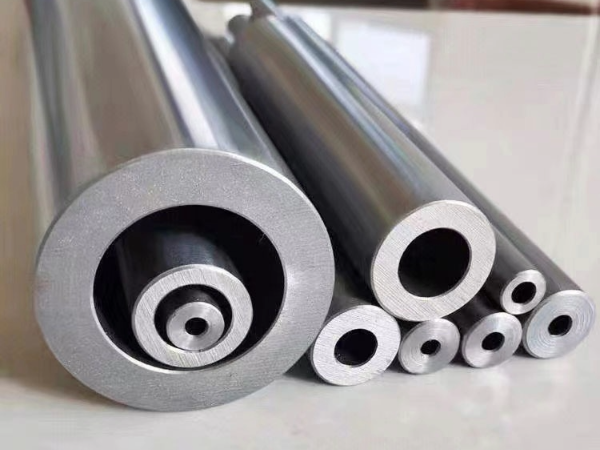
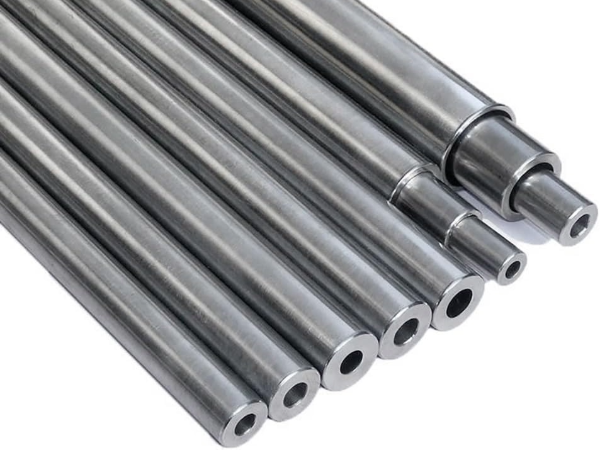
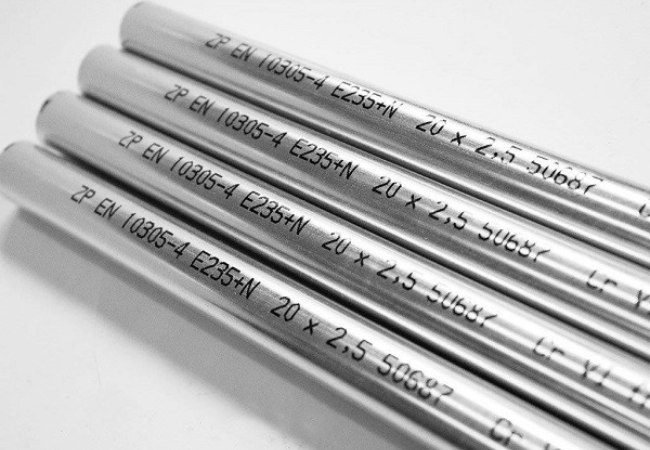
Specifications of Precision Steel Tubes
|
High Precision Tubes |
Specifications |
|||
|
Schedule |
SCH5, SCH10, SCH20, SCH30, SCH40, STD, SCH60, SCH80, SCH100, SCH120, SCH140, SCH160, XS, XXS |
|||
|
Standard |
ASME/ANSI B16.11, MSS-SP-97, MSS-SP-79, JIS B2316, BS 3799 |
|||
|
Tubes Size |
1/2″OD TO 8″OD |
|||
|
Type |
Seamless/ erw/ welded/semi welded in round, square, rectangular, coil form, u shape and hydraulic. Tubes |
|||
|
Grades |
||||
|
Stainless Steel |
ASTM / ASME 201, 202, 301, 304, 304L, 310, 310S, 316L, 316TI, 317, 317L, 321, 347, 409, 409M, 409L, 410, 410S, 420, 430, 431, 441, 444, 446, 17.4PH, 904L |
|
|
|
|
Super Duplex Steel |
S32750 |
|
|
|
|
Duplex Steel |
ASTM / ASME SA 790 UNS NO S 31803 , S 32205 , S 32550 , S 32750 , S 32760. |
|
|
|
|
Carbon Steel |
ASTM / ASME A 335 GRP 1 , P 5 , P 9 , P 11 , P 12 , P 22 , P 23 , P 91 |
|
|
|
|
Alloys Steel |
ASTM / ASME A 691 GRP1 CR , 1 1/4 CR , 2 1/4 CR , 5 CR , 9CR , 91. |
|
|
|
|
Nickel Alloys |
Nickel Alloys 200, Nickel Alloys 201 |
|
|
|
|
Titanium |
Grade 1, Grade 4, Grade 5(Ti 6Al-4V), Grade 6(Ti 5Al-2.5Sn), Grade 7, Grade 11, Grade 12, 8Ai-1Mo-1V, Grade 9(3Al-2.5V), 6Al-6V-25n, 6Al-2Sn-4Zr-2Mo, 6Al-7Nb, Grade 23(Ti 6AL-4V ELI), Grade 5 ELI |
|
|
|
|
Inconel |
Inconel 600, Inconel 601, Inconel 625, Inconel 625LCF, Inconel 686, Inconel 718, Inconel 800, Inconel 825, Inconel X-750 , Inconel 690, Inconel 602, Inconel 617, Inconel 925, Inconel A-289, Inconel AL-6XN, AL-904L |
|
|
|
|
Hastelloy |
Hastelloy C-22, Hastelloy C-276, Hastelloy C-2000, Hastelloy C-4, Hastelloy X, Hastelloy B, Hastelloy N, Hastelloy G |
|
|
|
|
Molybdenum |
ASTM / ASME A 182 GR F 5, F 9 , F 11 , F 12 , F 22 , F 91, ASTM B387, Ferro Molybdenum |
|
|
|
|
Cobalt |
Cobalt HS-6, Cobalt HS-4, Cobalt HS-25, Sterlite Grade 1, Sterlite Grade 6, Sterlite Grade 12, Sterlite Grade 21 |
|
|
|
|
Niobium |
ASTM B394, R04200 R04210 |
|
|
|
|
Nimonic |
Nimonic75, Nimonic80, Nimonic85, Nimonic90, Nimonic263, etc |
|
|
|
|
Tungsten |
W1 WAl1, W61, etc, Carbonide Tungsten, Copper Tungsten, Nickel Tungsten |
|
|
|
|
Nichrome |
Nichrome90, Nichrome80, Nichrome80A, Nichrome RW80, Nichrome75, etc |
|
|
|
|
Magnesium |
Magnesium AL017100, AL017140, AL017150, AL017160, AL017200, AL017210, AL017250, etc. |
|
|
|
|
Tantalum |
Tantalum – Grade 1. |
|
|
|
|
Monel |
Monel 400, Monel k500 |
|
|
|
|
MU-METAL |
MU-METAL |
|
|
|
|
Zirconium |
Zirconium 702, Zirconium 705,Zirconium 705, Zirconium-2, Zirconium-4 |
|
|
|
|
Beryllium Copper |
Alloy 25 UNSC17200 |
|
|
|
|
Aluminium |
1050,1100, 2017, 7150, 7178, 7575, 2050, 7085, 2011 A92011, 2014A A92014, 2024 A92024, 2219, 5052 A95052, 5083 A95083, 5754, 6061 A96061 A86061, 6063, 6082 A96082, 7071 7020, 7050 A97050, 7075 A97075 A87075, 7175 |
|
|
|
|
Copper Alloys |
C 11000, C 10200, C 12200, C 51100, C 51000, C 51900, C 52000, C 52100, C 74500, C 75700, C 75400, C 76400, C 77000, C 21000, C 22000, C 23000, C 24000, C 26000, C 26800, C 27000, C 27200, C 28000 |
|
|
|

Precision Steel Pipe Features
a. You can get a smaller diameter with precision steel pipe
b. High precision pipe accept small quantity for MOQ.
c. The pipes with cold drawn processes has high precision and good surface finish.
d. The transverse area of the steel pipe is more complicated.
e. Performance is superior, with higher density.
Application of Precision Steel Tubing
The internal and external diameter could control within +/- 0.01 mm. In the guarantee of anti-bending strength and torque strength same, the weight of precision pipe is lighter. It can be widely used in manufacturing precision machinery parts and engineering structure, and also commonly used to produce various kinds of conventional weapons, barrel, shells, bearing and so on.
|
Size Range |
6NB to 1200NB IN |
|
Pipe Type |
Round, Square, Rectangle, Coil, "U" Shape, Hydraulic & Honed Tubes |
|
Schedule |
SCH. 5, 10, 20, 30, 40, 60, 80, 100, 120, 140, 160, XXS. |
|
Tube Range |
1/2" OD - 12" OD, Guage: 25 SWG - 10 SWG |
|
Tube Type |
Round, Square, Rectangle, Coil, "U" Shape, Hydraulic & Honed Tubes |
|
Length |
Single Random, Double Random & Cut Length |
|
End |
Plain End, Beveled End |
High Precision Tubes Technical Properties
High precision Tubes are produced as per ASTM A519, JIS G3445, EN10305-1, EN10305-4, DIN2391, GOST8734, ISO3074|
Nominal size |
Nominal Wall Thickness (mm) |
|
DN |
SCH |
|
12.70 |
1.0, 1.2, 1.6, 2.0 |
|
13.50 |
1.0,1.2 |
|
16.00 |
1.0,1.2 |
|
17.20 |
1.0,1.2,1.6 |
|
19.00 |
1.0,1.2,1.6 |
|
20.00 |
1.0,1.2,1.6 |
|
21.30 |
1.0,1.2,1.67 |
|
22.00 |
1.0,1.2,1.6,2.0 |
|
25.40 |
1.0,1.2,1.6,2.0 |
|
26.90 |
1.0,1.2,1.6,2.0 |
|
28.50 |
1.0,1.2,1.6,2.0 |
|
30.00 |
1.0,1.2,1.6,2.0 |
|
31.80 |
1.0,1.2,1.6,2.0 |
|
33.70 |
1.0,1.2,1.6,2.0 |
|
38.00 |
1.0,1.2,1.6,2.0 |
|
42.40 |
1.0,1.2,1.6,2.0 |
|
44.50 |
1.0,1.2,1.6,2.0 |
|
48.30 |
1.0,1.2,1.6,2.0 |
|
51.00 |
51.00 |
|
Outside Diameter (mm) / |
SCH |
SCH |
SCH |
STD |
SCH |
SCH |
XS |
SCH |
SCH |
SCH |
SCH |
SCH |
|
457 |
6.35 |
7.92 |
11.13 |
9.53 |
14.27 |
19.05 |
12.70 |
23.88 |
29.36 |
34.93 |
39.67 |
45.24 |
|
508 |
6.35 |
9.53 |
12.70 |
9.53 |
15.09 |
20.62 |
12.70 |
26.19 |
32.54 |
38.10 |
44.45 |
50.01 |
|
559 |
6.35 |
9.53 |
12.70 |
9.53 |
|
22.23 |
12.70 |
28.58 |
34.93 |
41.28 |
47.63 |
53.98 |
|
610 |
6.35 |
9.53 |
14.27 |
9.53 |
17.48 |
24.61 |
12.70 |
30.96 |
38.39 |
46.02 |
52.37 |
59.54 |
|
660 |
7.92 |
12.70 |
|
9.53 |
|
|
12.70 |
|
|
|
|
|
|
711 |
7.92 |
12.70 |
15.88 |
9.53 |
|
|
12.70 |
|
|
|
|
|
|
762 |
7.92 |
12.70 |
15.88 |
9.53 |
|
|
12.70 |
|
|
|
|
|
The cold-die reduction process per EN 10305-1 Section 5.2:
Each pass reduces wall by 15-30%: Pass 1 = 25% reduction → closer tolerance; Pass 2 = 20% → tighter; Pass 3 = 15% → final tolerance.
Why multiple passes:
(1) Single pass over-reduces, causes splits per ASTM A1016 Section 7
(2) Intermediate anneals restore ductility per ASTM A513 Section 8.2
(3) Each pass corrects previous variation — cumulative correction algorithm
Laser measurement feedback after each pass adjusts die automatically per ISO 25178.
Result: ±0.03mm = 0.3% of 10mm wall — exceeds EN 10305-1 Class H tolerance (normally ±0.05mm for precision tube).
Cold-rolled (Pilger process) per EN 10305-1 Section 4.2:
(1) Uses rotating dies — rolling action produces smoother ID surface (Ra ≤ 0.4μm)
(2) Better for long lengths (up to 30m continuous per DIN 1630)
(3) Higher productivity but less flexible for thick walls (> 8mm)
Cold-drawn per EN 10305-2 Section 4.3:
(1) Pulls through stationary die — better OD tolerance (±0.03mm per ISO 3304)
(2) Better for thick walls (> 8mm) — reduction per pass 15-25%
(3) More common for precision applications requiring tight concentricity
Both achieve same final tolerance (±0.05mm OD, ±0.03mm WT per EN 10305-1 Table 2).
Choice depends on: length, wall thickness, surface finish required per ISO 3304 Table A.
Residual stress from cold work per ASTM A513 Section 11.2:
Drawing leaves bending moment in tube: M = E × I / R (curvature).
Straightening method per ISO 3304 Annex B:
(1) First pass: coarse correction (2-roller) — removes 80% of bend
(2) Second pass: fine correction (6-roller) — removes remaining 15%
(3) Third pass: stress equalization (straightener with 150° wrap) — removes final 5%
Each pass rotates 90° for uniform correction across circumference.
Result: ≤ 0.5mm/m straightness achievable per EN 10305-1 Table 3 (Class S1).
Technical limit per EN 10305-1 Table 1 and ISO 3304 Section 5:
Die angle α = 12-20° limits reduction per pass: minimum wall = previous wall × (1 - reduction%).
For 10mm → 8mm (20% reduction): Easy — reduction within normal range per EN 10305-1
For 1mm → 0.8mm (20% reduction): Difficult — risk of buckling at wall < 1mm
Practical minimum wall:
Seamless cold-drawn: 0.5mm per EN 10305-1 (cold-drawn seamless)
Welded cold-drawn (DOM): 0.8mm per ASTM A513 (weld integrity limits below 0.8mm)
Below 0.5mm: requires specialized processes (cold-rolled strip, welded laser tube per ISO 3304 Annex C).
Strain hardening mechanism per ASTM E8/E8M Section 6:
Cold work % = (A₀ - A₁) / A₀ × 100% (area reduction).
Each 1% cold work: +5-10 MPa yield strength per EN 10305-1 Annex C.
Example: 20% cold work = +100-200 MPa increase in yield.
Trade-off: Higher yield → lower elongation. Elongation drops ~1% per 5% cold work per ASTM A1016 Table 3.
Solution: intermediate annealing restores ductility per ASM Metals Handbook Vol 4.
Process: 680-720°C, 30 min, argon atmosphere (dew point ≤ -40°C per ASTM A1016).
Oxygen causes scale at high temperature per ASTM A1016 Section 8:
Air anneal = blue/black iron oxide (Fe₂O₃/Fe₃O₄) formation = surface roughness Ra increases from 0.2μm to > 2.0μm.
Argon benefits:
(1) Prevents oxidation — no scale formation. Oxygen content ≤ 10 ppm required per ASTM E112
(2) Faster heat transfer = uniform temp distribution (within ±5°C across 6m tube per ASME BPE)
(3) Reduces decarburization — carbon loss limited to ≤ 0.05%C from surface per ASTM A1016 Section 8.2
Process: Tube enters furnace → argon purge (10× volume) → heat to 750-850°C → cool → argon flow maintained until exit at < 150°C per EN 10305-1 Section 5.3.
Result: Ra 0.2-0.4μm achievable (mirror finish per ASTM A480).