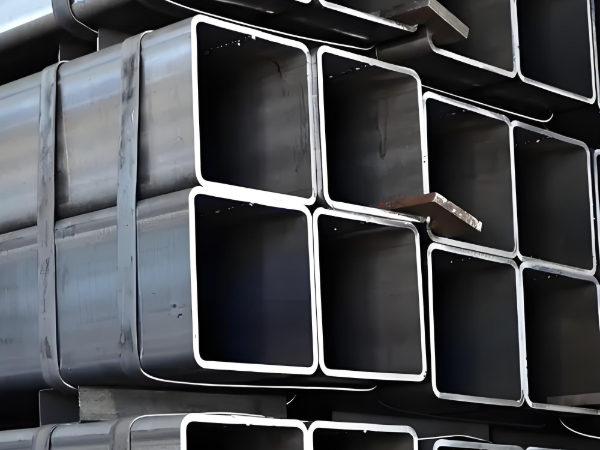
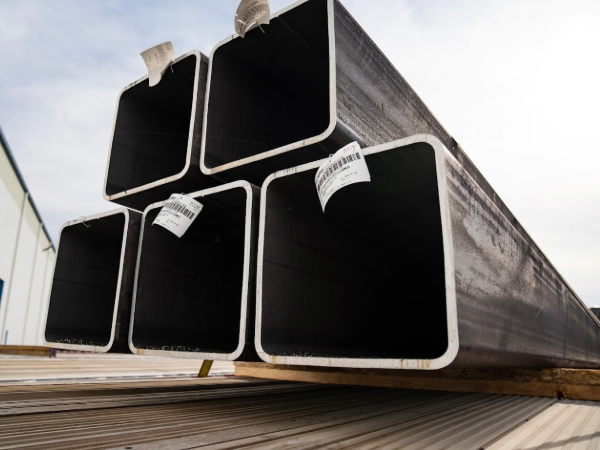
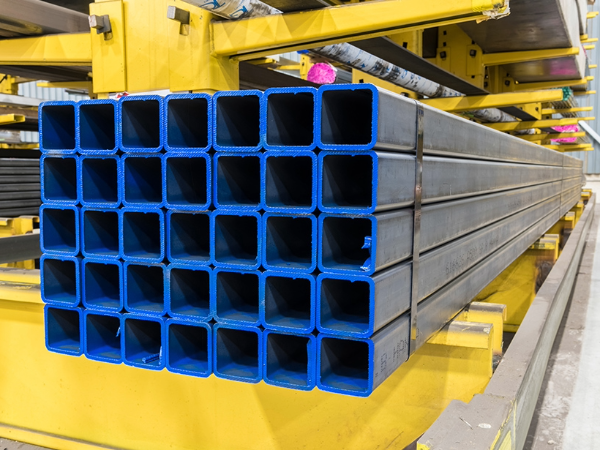
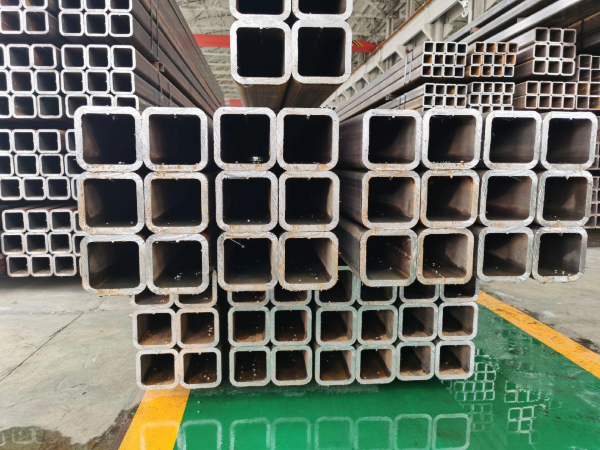
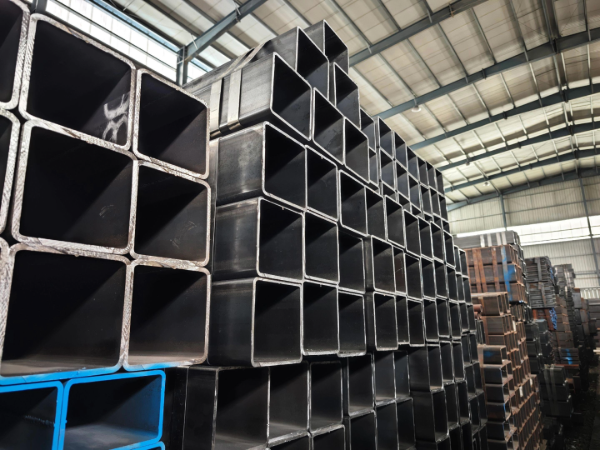
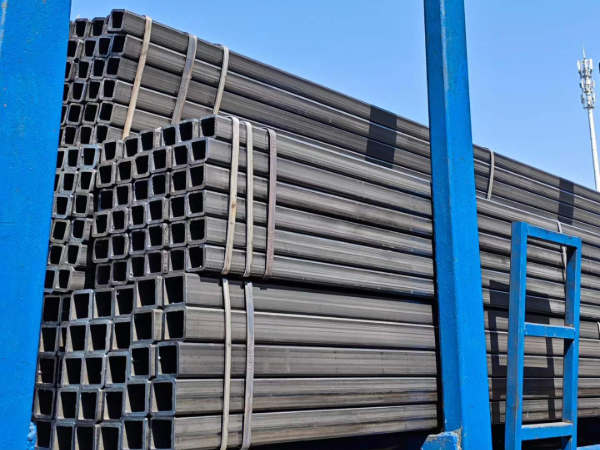
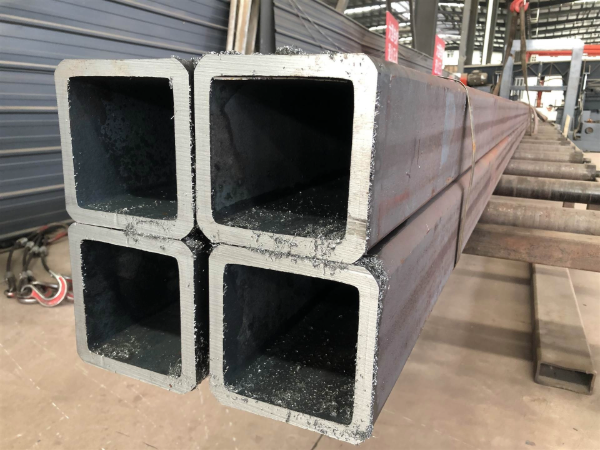
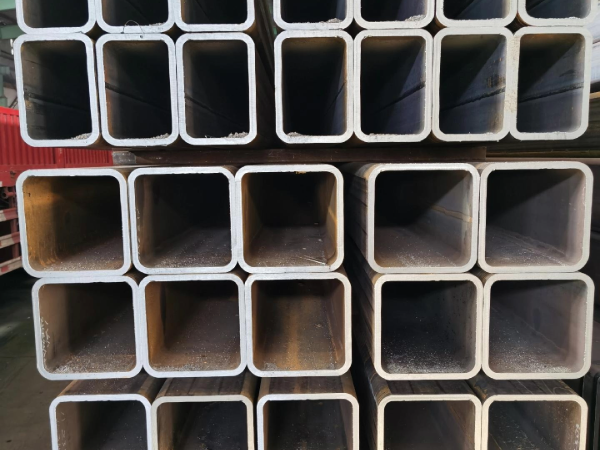
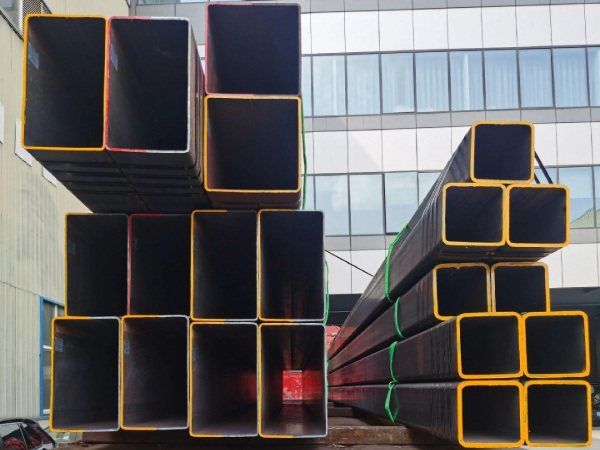
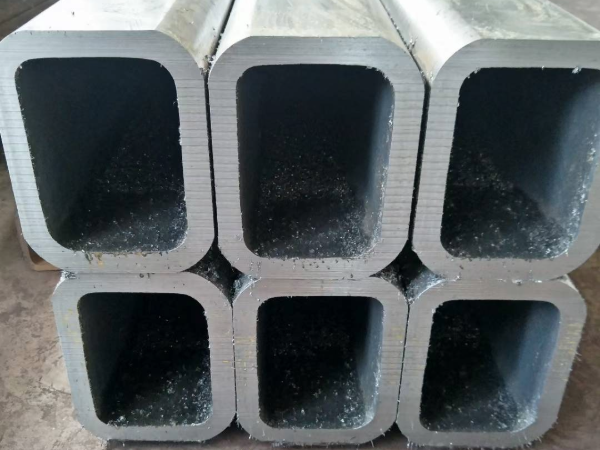
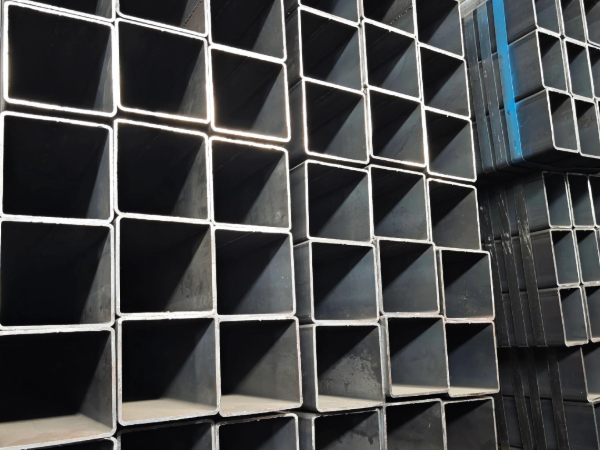
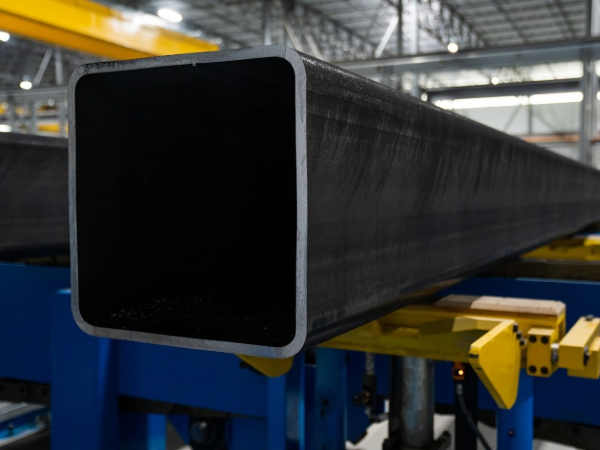
Square Steel Pipe Introduction
|
Application: |
Widely used in furniture, interior decoration, structure |
|
Size: |
OD: 10*10-1000*1000mm |
|
Pipe Standard: |
DIN EN 10210, DIN EN 10219, GB/T 178-2005,ASTM A53, ASTM A500,BS EN 10219,JIS G 3466, ASTM A513, ASTM A36 |
|
S235JR,S355JR,Q235,St37,St37-2,St52,SS400, STK500, Q235B, Q345 |
|
|
Furface: |
Black bared, can be galvanized, oiled, painted, powdered. |
|
Packing: |
Waterproof plastic bag, bundle with strip |
|
Application: |
Widely used in furniture, interior decoration, structure |
|
Size: |
OD: 10*10-1000*1000mm |
Standard of Square Steel Pipe
ASTM A500 Grade B,
ASTM A513 (1020-1026)
ASTM A36 (A36)
EN 10210: S235, S355, S235JRH, S355J2H, S355NH
EN 10219: S235, S355, S235JRH, S275J0H, S275J2H, S355J0H, S355J2H
|
Size by Inch (diameter) |
Thickness |
Sizes by MM (diameter) |
Thickness |
|
inch |
inch |
mm |
mm |
|
1/2" x 1/2" |
0.065" |
16mm×16mm |
0.4mm~1.5mm |
|
3/4" x 3/4" |
0.049" |
18mm×18mm |
0.4mm~1.5mm |
|
0.065" |
20mm×20mm |
0.4mm~3mm |
|
|
0.083" |
22mm×22mm |
0.4mm~3mm |
|
|
0.120" |
25mm×25mm |
0.6mm~3mm |
|
|
1" x 1" |
0.049" |
30mm×30mm |
0.6mm~4mm |
|
0.058" |
32mm×32mm |
0.6mm~4mm |
|
|
0.065" |
34mm×34mm |
1mm~2mm |
|
|
0.072" |
35mm×35mm |
1mm~4mm |
|
|
0.083" |
38mm×38mm |
1mm~4mm |
|
|
0.095" |
40mm×40mm |
1mm~4.5mm |
|
|
0.109" |
44mm×44mm |
1mm~4.5mm |
|
|
0.120" |
45mm×45mm |
1mm~5mm |
|
|
1 1/8" x 1 1/8" |
0.035" |
50mm×50mm |
1mm~5mm |
|
0.049" |
52mm×52mm |
1mm~5mm |
|
|
0.065" |
60mm×60mm |
1mm~5mm |
|
|
0.109" |
70mm×70mm |
2mm~6mm |
|
|
0.120" |
75mm×75mm |
2mm~6mm |
|
|
1 1/4" x 1 1/4" |
0.049" |
76mm×76mm |
2mm~6mm |
|
0.065" |
80mm×80mm |
2mm~8mm |
|
|
0.072" |
85mm×85mm |
2mm~8mm |
|
|
0.083" |
90mm×90mm |
2mm~8mm |
|
|
0.109" |
95mm×95mm |
2mm~8mm |
|
|
0.120" |
100mm×100mm |
2mm~8mm |
|
|
0.135" |
120mm×120mm |
4mm~8mm |
|
|
0.156" |
125mm×125mm |
4mm~8mm |
|
|
0.188" |
130mm×130mm |
4mm~8mm |
|
|
1 1/2" x 1 1/2" |
0.049" |
140mm×140mm |
6mm~10mm |
|
0.065" |
150mm×150mm |
6mm~10mm |
|
|
0.072" |
160mm×160mm |
6mm~10mm |
|
|
0.083" |
180mm×180mm |
6mm~12mm |
|
|
0.109" |
200mm×200mm |
6mm~30mm |
|
|
0.120" |
220mm×220mm |
6mm~30mm |
|
|
0.140" |
250mm×250mm |
6mm~30mm |
|
|
0.188" |
270mm×270mm |
6mm~30mm |
|
|
0.250" |
280mm×280mm |
6mm~30mm |
|
|
1 3/4" x 1 3/4" |
0.065" |
300mm×300mm |
8mm~30mm |
|
0.083" |
320mm×320mm |
8mm~30mm |
|
|
0.095" |
350mm×350mm |
8mm~30mm |
|
|
0.109" |
380mm×380mm |
8mm~30mm |
|
|
0.120" |
400mm×400mm |
8mm~30mm |
|
|
0.188" |
420mm×420mm |
10mm~30mm |
|
|
2" x 2" |
0.049" |
450mm×450mm |
10mm~30mm |
|
0.065" |
480mm×480mm |
10mm~30mm |
|
|
0.083" |
500mm×500mm |
10mm~30mm |
|
|
0.109" |
550mm×550mm |
10mm~40mm |
|
|
0.120" |
600mm×600mm |
10mm~40mm |
|
|
0.145" |
700mm×700mm |
10mm~40mm |
|
|
0.165" |
800mm×800mm |
10mm~50mm |
|
|
0.188" |
900mm×900mm |
10mm~50mm |
|
|
0.250" |
1000mm×1000mm |
10mm~50mm |
|
|
0.312" |
|
|
|
|
2 1/4" x 2 1/4" |
0.188" |
|
|
|
0.250" |
|
|
|
|
2 1/2" x 2 1/2" |
0.083" |
|
|
|
0.109" |
|
|
|
|
0.120" |
|
|
|
|
0.188" |
|
|
|
|
0.250" |
|
|
|
|
0.312" |
|
|
Advantages of Square Steel Pipe
Used for a variety of applications, some benefits of square tubing include:
Cost-effective
Strength
Uniformity
Metallurgical Tests
Metallurgical Tests confirm that the chemical requirements of the pipe are as per the material standard.
•Metallurgical Tests are normally known as Micro and Macro pipe inspection & testing.
•Micro Analysis or Chemical Analysis of
1. Raw material
2. Product
3. Weld ensures that all the alloying elements are within the range as specified in the material standard.
•Macro Analysis for Weld will check the proper fusion of weld material with pipe material.
Some special pipe inspection tests are also carried out on the material when it is going to be used in aggressive environments. These tests will ensure that pipe material is able to withstand in such aggressive environments also. Some of the tests are
•Grain size (AS & SS)
•IGC- Intergranular Corrosion Test(SS)
•Ferrite (SS)
•HIC- Hydrogen-induced Cracking
•SSC- Sulfide Stress Corrosion Cracking
These tests are performed when it is asked by the purchaser in his specification.
Destructive Test
The mechanical / Destructive test of pipe inspection confirms the mechanical requirements of pipe are as per the material standard.
In Destructive Testing- a sample from the pipe is cut to perform tests
•The tensile test is done to check the yield and ultimate tensile of the pipe. If required by the purchaser or by standard high or low-temperature tensile tests are also performed.
•Bend test / Guided bend test is used to check the integrity of weld joint
•The flattening test examines the ability of plastic deformation in a pipe
•Impact test / Charpy V-Notch Test, check the ability of a material to withstand low-temperature conditions
•A creep test is done to check the long-term effect of temperature under constant load.

|
Square Steel Pipe Dimensional Tolerances |
|||
|
Outside Diameter: |
Twist: |
Maximum twist per 3 feet of length |
|
|
Largest outside dimension |
Outside tolerance including convexity and concavity |
Longest outside dimension |
|
|
up to 2 1/2" |
±.020" |
2" to 2 1/2"inclusive |
.062" |
|
over 21/2" to 31/2" inclusive |
±.025" |
over 21/2" to 4" inclusive |
.075" |
|
over 31/2" to 51/2" inclusive |
±.030" |
over 4" to 6" inclusive |
.087" |
|
over 51/2" |
±1% |
over 6" to 8" inclusive |
100" |
|
Tolerances include allowance for convexity or concavity. For |
over 8" |
112" |
|
|
Straightness: |
|||
|
.125" x (total length)÷5 |
|||
|
Wall Thickness: |
Squareness of Sides: |
||
|
Maximum allowable variation |
±10% |
Adjacent sides may deviate from 90°by a tolerance of plus or minus 2 degrees maximum. |
|
|
(wall thickness is to be measured at the center of the flat, exclusive |
|||
|
Worner Radii: |
Flash: |
||
|
The radius of any outside corner shal not exceed three times |
Structural tubing usually is supplied flash-in. The height of the |
||
|
Grade |
Element |
C |
Mn |
P |
S |
|
ASTM A500 Gr.b |
% |
0.05%-0.23% |
0.3%-0.6% |
0.04% |
0.04% |
|
Acc.to EN10027/1 |
Acc.to EN10027/2 |
C% max (Norminal W.T.(mm) |
Si% max |
Mn% max |
P% max |
S% max |
N% max |
|
|
and IC 10 |
|
= 40 |
|
|||||
|
S235JRH |
1.0039 |
0.17 |
0.20 |
- |
1.40 |
0.045 |
0.045 |
0.009 |
|
S275JOH |
1.0149 |
0.20 |
0.22 |
- |
1.50 |
0.040 |
0.040 |
0.009 |
|
S275J2H |
1.0138 |
0.20 |
0.22 |
- |
1.50 |
0.035 |
0.035 |
- |
|
S355JOH |
1.0547 |
0.22 |
0.22 |
0.55 |
1.60 |
0.040 |
0.040 |
0.009 |
|
S355J2H |
1.0576 |
0.22 |
0.22 |
0.55 |
1.60 |
0.035 |
0.035 |
- |
SHS (Square Hollow Section) has equal sides (e.g., 100x100mm), providing uniform strength in all directions — ideal for columns and compression members per EN 1993-1-1 §6.2.4.
RHS (Rectangular Hollow Section) has unequal sides (e.g., 100x50mm), offering higher moment of inertia about the major axis per EN 10219-2 §5.2, making it more efficient for beams and frames where bending dominates one direction.
SHS typically costs 5-10% more than RHS of the same weight due to additional forming passes to square the corners. For multi-directional moment frames, SHS saves on connection detailing.
Wall thickness directly impacts three key factors:
(1) Section modulus Z = (bd² − (b−2t)(d−2t)³/6d) — thicker walls increase bending resistance per AISC 360 §F7.
(2) Slenderness ratio b/t — affects local buckling limits per AISC Table B4.1a. ASTM A500 Grade C allows b/t ≤ 1.40√(E/Fy).
(3) Local buckling capacity — thicker walls prevent inward buckling at connection points per CIDECT DG1 §3.2.
For structural applications, ASTM A500 Grade C (50 ksi / 345 MPa minimum yield) provides 15% higher capacity than Grade B (46 ksi / 315 MPa). Common thicknesses range from 1.0mm for light frames to 20mm for heavy structural columns.
Three main options available per ISO 1461:2022 and ASTM A123:
(1) Black (mill finish) — as rolled per ASTM A500 §11, requires painting after fabrication for corrosion protection. Most economical option.
(2) Hot-dip galvanized per ISO 1461:2022 — zinc coating ≥ 600 g/m² (≥ 85 μm average), service life 25-50 years per ISO 9223 (C3 environment). For coastal C5-M, recommend ≥ 1200 g/m².
(3) Pre-galvanized — galvanized coil (≥ 275 g/m² per EN 10143) formed into tube. Economical for indoor applications, lower corrosion resistance than hot-dip.
For architectural exposed structures, we offer powder coating (60-120 μm per ISO 12944) over galvanized substrate for dual protection.
Two primary methods per EN 10219-1 and EN 10210-1:
(1) Cold formed per ASTM A500 §7 — coil is roll-formed into square shape at room temperature, then ERW welded. Provides tighter tolerances (±0.5mm on side length per EN 10219-2 Table 3) and smoother surface (Ra 3.2 μm). Corner radius ≤ 2T.
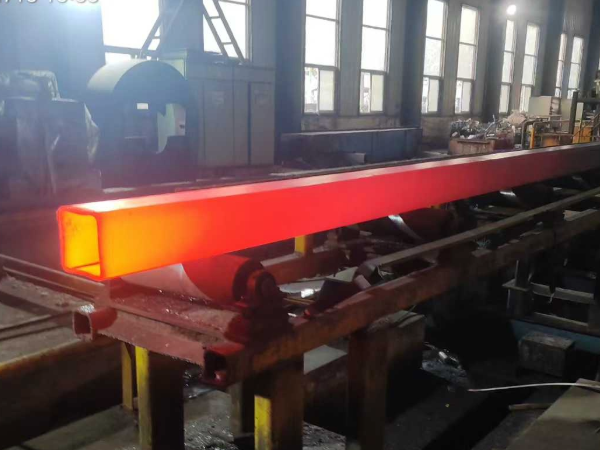
(2) Hot formed per EN 10210-1 — hot-rolled strip (> 900°C) shaped into square section. Sizes up to 600×600mm, cost-effective for thick walls (8-20mm). Corner radius ≤ 3T. Better mechanical properties and lower residual stress per EN 10210-2 §8.
Cold formed yields sharper corners beneficial for bolted connections; hot formed provides more consistent through-thickness properties for welded moment frames.
Every tube undergoes the following per ASTM A500 §12-13 and EN 10219-2 §7:
(1) 100% weld seam ultrasonic testing per ASTM A500 §13 — defect threshold > 5% wall loss. Rejection if linear indication ≥ 25mm.
(2) Dimensional verification — side length ±0.5mm per EN 10219-2 Table 3, wall thickness ±10% per ASTM A500 Table 3, corner radius per gauge (≤ 2T cold formed, ≤ 3T hot formed).
(3) Visual inspection per ASTM A500 §12 — no weld spatter, cracks, surface laps, or excessive straightness deviation (≤ 1.5mm/m).
(4) Chemical analysis + tensile test per heat per ASTM A370 §5-9. Full MTC per EN 10204 3.1 provided. Third-party inspection (SGS, BV, TÜV) available.
Four common connection methods per AISC 360 §J3-J9 and CIDECT DG1-6:
(1) Welding — CJP for moment connections per AWS D1.1 §4, fillet weld minimum leg 0.6× wall thickness per AWS D1.1 Table 8.1.
(2) Bolting — through-bolts with external plate connectors, minimum edge distance 1.5× bolt diameter per AISC Table J3.4. Hex or square washers for bearing.
(3) Mechanical fastening — self-drilling screws or rivets for ≤ 3mm wall, light structural applications.
(4) Slip-fit — allow 2-3mm clearance for telescoping, secure with set screws or tack weld.
Key design points: stress concentration at corners (avoid sharp notches per EN 1993-1-8 §7.5), wall thickness compatibility between connected members, and weld access inside closed sections. For moment-resisting frames, internal stiffeners at beam-column joints per AISC 360 §J10.