Xenith Steel
Xenith Steel
Imagine specifying a 300-meter steel frame for a high-rise — every column splice, beam connection, and brace relies on hollow section material that must meet both strength (A500 Gr C: 345 MPa min yield per ASTM A500 Table 2) and straightness (≤1/8 in. per 10 ft per ASTM A500 Section 14.2). Cold forming versus hot forming changes the corner radius (2t vs 3t for square sections per EN 10219 Table A.1) and residual stress profile. For architectural exposed structures, tighter cosmetic tolerances and surface finish matter. Xenith Steel supplies structural steel pipe in round, square, and rectangular profiles under ASTM A500 Gr B/C, EN 10219 S235/S355, and JIS G3466, with full MTC traceability, custom lengths (1-18m), and optional hot-dip galvanizing to ASTM A123.
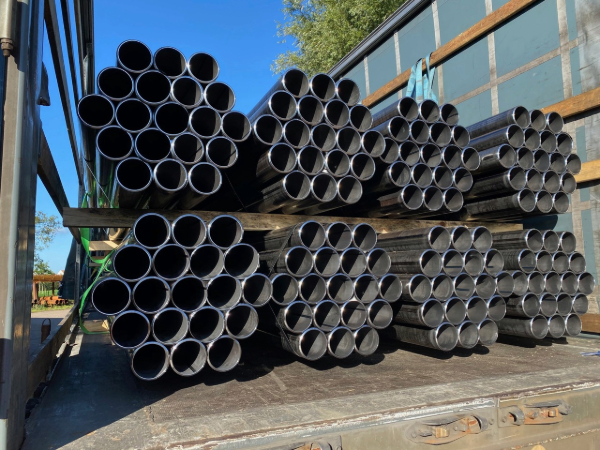
ASTM A500 round structural steel pipe for building construction
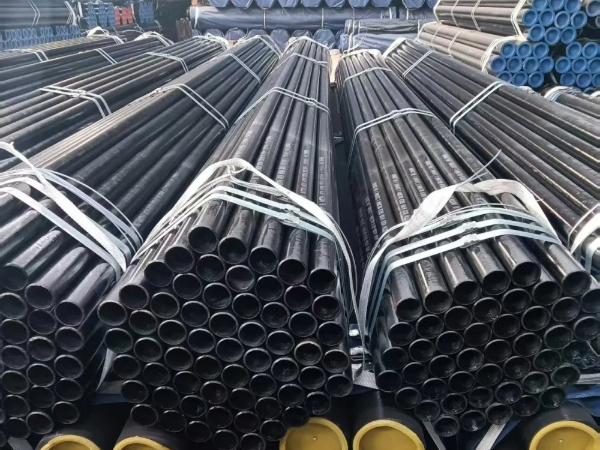
EN 10219 cold formed square hollow section
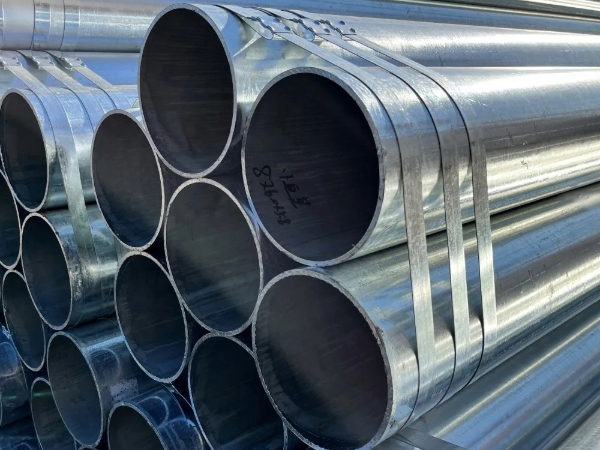
Rectangular steel tube for mechanical structure application
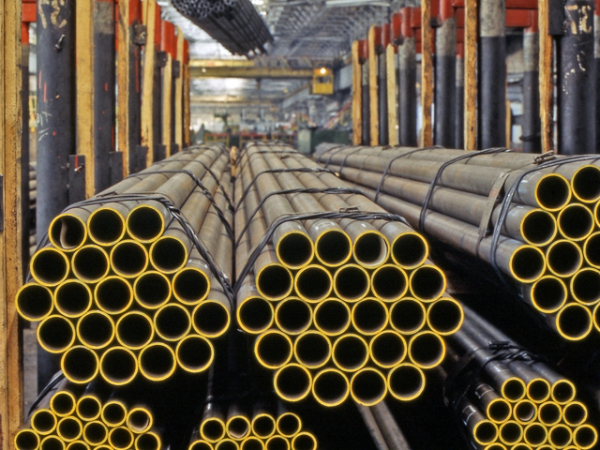
Structural steel pipe bundle with protective packaging
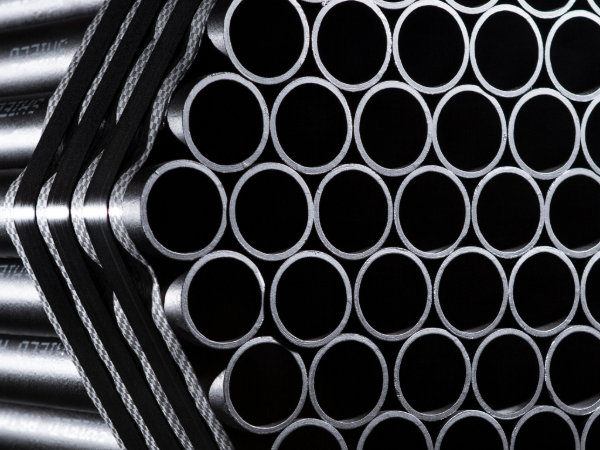
Hot rolled structural tube cross-section showing wall thickness

Structural Steel Pipe

  • Products details
  • Tolerance table
  • Chemical composition
  • Specification

Structural Steel Pipe Introduction

Product:

Structural Seamless Pipe, Seamless Structural Pipe

Application:

Used in the general structure and the mechanism Industry

Size:

OD: 114mm-914mm

WT: 4mm-60mm

LENGTH: 5.8/6/11.8/12m

Pipe Standard:

ASTM A53 ASTM A519 ASTM A500

JIS G3444

DIN1629 / EN10210/10219


Types of Structural Steel Pipe

ERW Steel Pipe

Seamless Steel Pipe
DSAW Carbon Steel Pipe
Spiral Steel Pipe
Fence Pipe
Culvert Pipe


Structural Steel Pipe Specifications

Size Range

6NB to 1200NB IN

Schedule

5, 10, 20, 30, 40, 60, 80, 100, 120, 140, 160, XXS.

Length

Double Random, Single Random, & Cut Length

Pipe Type

Round, Rectangle, Square, Hydraulic, Honed Tubes

End

Beveled End,Plain End.

Standard

GB/T 8163 2008, GB/T 8162 2008, ASTM A53 Gr.B, ASTM A106 Gr.B, ASTM A210, ASTM A333, DIN2448, DIN1629, DIN17175, EN10216, EN10204, EN10297 etc.

Material

20#, Q345B, ST52, S355JRH, ST37, 10#, A106/A53 GR.B


Seamless Structural Steel Pipe Dimensions

Type

Seamless steel pipes

Specification

114-914MM 4 - 60MM

Diameter

114MM - 914MM

Thickness

4MM - 60MM

Length

According to Clients Requirements

Special pipe

Regular and special thick-walled structure steel pipe, maximum thickness up to 60MM

Process

Hot rolled and Hot Expanded

Application

Our high quality structure steel pipes are highly sought after by customers from petroleum, natural gas, manufacturing, transportation and construction industries.


Structural Steel Pipe Applications

Oil & Gas Sector

API

5L

API

5CT

IS

1978, 1979

Automotive Industry

ASTM

ASTM-519

SAE

1010, 1012, 1020, 1040, 1518, 4130

DIN

2391, 1629

BS

980, 6323 (Pt-V)

IS

3601, 3074

Hydrocarbon Process Industry

ASTM

ASTM-53, ASTM-106, ASTM-333, ASTM-334, ASTM-335, ASTM-519

BS

3602,3603

IS

6286

Bearing Industry

SAE

52100

Hydraulic Cylinder

SAE

1026, 1518

IS

6631

DIN

1629

Boiler, Heat Exchanger, Superheater & Condenser

ASTM

A-179, A-192, A-209, A-210, A-213, A-333, A-334,A-556

BS

3059 (Pt-I Pt-II)

IS

1914, 2416, 11714

DIN

17175

Railway

IS

1239 (Pt-I),1161

BS

980

Mechanical, Structural General Engineering

ASTM

A-252, A-268, A-269, A-500, A-501, A-519, A-589

DIN

1629, 2391

BS

806, 1775, 3601, 6323

IS

1161, 3601


Application

Agriculture
Automotive
Construction
Energy
Machinery
Oil and Gas
Shoring

  • Process

  • Tests
Our testing capabilities include
Visual inspection and step by step monitoring of all processes to ensure the best possible quality
Radiographic Testing (RT)
Ultrasonic Testing (UT)
Dye Penetrant Testing (PT)
Magnetic Particle Testing (MT)
Heat treating and stress relieving
Hardness Testing
Impact Testing
  • Packing & Delivery

  • Tolerance table


  • Chemical composition

Chemical Requirements oF ASTM A106 Seamless Structural Steel Pipe


Composition, %

Grade A

Grade B

Grade C

Carbon, maxA

0.25

0.30

0.35

Manganese

0.27-0.93

0.29-1.06

0.29-1.06

Phosphorus, max

0.035

0.035

0.035

Sulfer, max

0.035

0.035

0.035

Silicon, min

0.10

0.10

0.10

Chrome, maxB

0.40

0.40

0.40

Copper, maxB

0.40

0.40

0.40

Molybdenum, maxB

0.15

0.15

0.15

Nickel, maxB

0.40

0.40

0.40

Vanadium, maxB

0.08

0.08

0.08


Chemical Requirements of A 53 Structural Steel Pipe

Composition, max. %

Carbon

Manganese

Phosphorus

Sulfur

Copper

Nickel

Chromium

Molybdenum

Vanadium

Type S (seamless pipe)

Open-hearth, electric-furnace or basic-oxygen


Grade A

0.25

0.95

0.05

0.045

0.40

0.40

0.40

0.15

0.08

Grade B

0.30

1.20

0.05

0.045

0.40

0.40

0.40

0.15

0.08

Type E (electric-resistance-welded)

Open-hearth, electric-furnace or basic-oxygen


Grade A

0.25

0.95

0.05

0.045

0.40

0.40

0.40

0.15

0.08

Grade B

0.30

1.20

0.05

0.045

0.40

0.40

0.40

0.15

0.08

Type F (furnace-welded pipe)

Open-hearth, electric-furnace or basic-oxygen


Grade A

0.30

1.20

0.05

0.045

0.40

0.40

0.40

0.15

0.08

  • Inquiry

Frequently Asked Questions

1. What is the difference between hot rolled and cold formed structural pipe in terms of residual stress and corner radius?

Hot rolled (EN 10210-1, ASTM A501): formed at >900°C then air-cooled, resulting in lower residual stress (typically 30-50 MPa vs 80-120 MPa for cold formed per EN 1993-1-1 Section 5.5). Corner radius: EN 10210-2 Table 7 specifies 1.5t to 2.5t. Cold formed (EN 10219, ASTM A500): roll-formed at ambient temperature, work hardening increases yield strength by 10-15% in corners (Section 6.2 of EN 10219-1), but residual stress from forming reduces column buckling resistance — accounted for by the 0.85 reduction factor per EN 1993-1-1 Clause 6.3.1. ASTM A500 Section 14.1 specifies corner radius ≤ 3.0t for cold formed. Hot rolled preferred for welded moment frames; cold formed preferred for trusses and braces where tighter tolerances and sharper corners benefit bolted connections.

2. What is the minimum yield strength difference between ASTM A500 Gr B and Gr C for structural tubing?

Per ASTM A500 Table 2: Grade B round tubes require 315 MPa (46 ksi) min yield and 400 MPa (58 ksi) min tensile; Grade C requires 345 MPa (50 ksi) min yield and 427 MPa (62 ksi) min tensile. For square/rectangular sections, Gr B yield is 290 MPa (42 ksi) min. Grade C is specified when higher load capacity is needed without increasing section size — common in high-bay warehouses and multi-story frames where column slenderness ratios approach KL/r = 120 per AISC 360.

3. What are the corner radius tolerances for cold formed vs hot rolled hollow sections?

Per EN 10219 Table A.1 (cold formed): outside corner radius ≤ 3.0t for t ≤ 6mm, ≤ 2.5t for t > 6mm. Per EN 10210-2 Table 7 (hot rolled): radius = 1.5t to 2.5t depending on wall thickness. ASTM A500 Section 14.1 specifies corner radius ≤ 3.0t for cold formed. Cold formed sections have tighter radius and sharper corners — better for bolted connections; hot rolled sections offer smoother radius and lower residual stress for welded frames.

4. What wall thickness tolerances apply under ASTM A500 for structural pipe?

Per ASTM A500 Section 14.7: wall thickness tolerance is ±10% of specified wall for all sizes, measured at any point. For example, a 4-inch SCH 40 pipe (nominal 0.337 in. wall) permits 0.303-0.371 in. For EN 10219, tolerance is ±10% for t ≤ 5mm, ±0.5mm for 5 < t ≤ 10mm, ±5% for t > 10mm. Tighter tolerances (±0.2mm) available on request for precision mechanical applications.

5. What straightness and length tolerances apply to structural steel tubing?

Per ASTM A500 Section 14.3: straightness tolerance is 1/8 in. (3.2mm) maximum deviation per 10 ft (3.05m) of length. Per ASTM A500 Section 14.2: length tolerance for specified lengths is +1/2 in., -0 in. (12.7mm over, no under). EN 10219 Clause 10.2 allows ±5mm for lengths up to 6m, ±10mm for longer lengths. Tighter straightness tolerances (1/16 in. per 10 ft) available for architectural exposed structures.

6. What hot-dip galvanizing standard applies to structural pipe and what coating thickness is required?

Per ASTM A123/A123M: minimum average coating thickness for structural pipe is 3.9 mils (100 microns) for 1/8-1/4 in. wall, 4.5 mils (115 microns) for >1/4 in. wall. Adhesion per ASTM A123 Section 7.2: no delamination by hammer test. For EN ISO 1461: minimum local coating thickness 70 microns, average 85 microns. Xenith Steel offers hot-dip galvanizing with certified coating weight reports per ASTM A123.