Xenith Steel
Xenith Steel
When a well completion program calls for BTC versus LTC couplings, the difference is in the thread load flank — BTC uses a 0° buttress flank (API 5CT Section 11.8) rated for 1.5× the pipe body tensile efficiency, while LTC relies on a gasket seal better suited for 5,000 psi working pressure tubing strings. For sour service wells with H₂S ≥ 0.05 psia partial pressure per NACE MR0175/ISO 15156, L80 and C95 grades in controlled hardness (≤23 HRC per API 5CT Table C.1) are mandatory — Xenith Steel's API 5CT coupling program covers every grade from J55 (55-80 ksi yield) through Q125 (125-150 ksi yield), with full EN 10204 3.1 MTC traceability, SGS/BV third-party inspection optional, and crossover subs available when fleet thread patterns don't match.
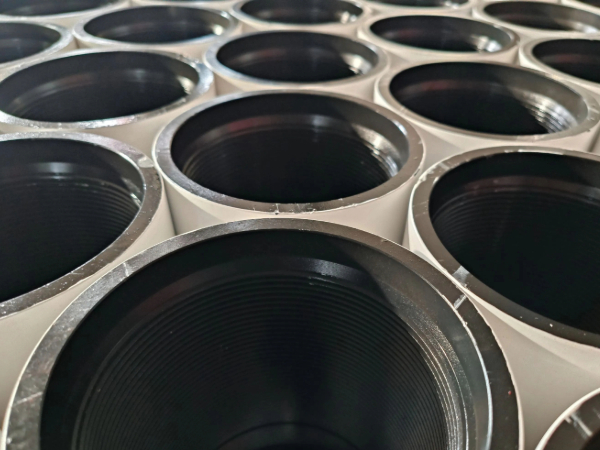
API 5CT BTC tubing coupling with threaded end
Casing coupling LTC thread type for OCTG completion
Pup joint short section with couplings on both ends
STC thread coupling for low-pressure casing string
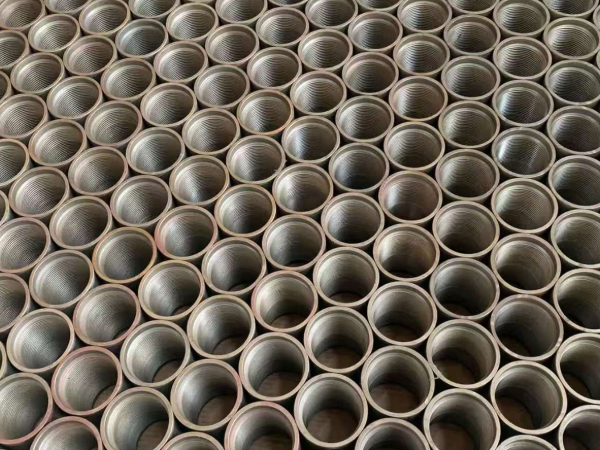
API 5CT coupling cross-section showing thread profile

Tubing And Casing Coupling

Product: Casing and Tubing Coupling, Casing Coupling, Tubing Coupling
Application: Used for connect 2 joints of tubing or casing
Size: Tubing Coupling : 1.8/9 -  4-1/2''
Casing  Couping :  4-1/2'' - 13-3/8''
Pipe Standard: API 5CT and 5B PSL1/PSL2  J55,K55,N80-1,N80-Q,
API 5CT and 5B L80-1,C90, C95,T95, P110, Q125
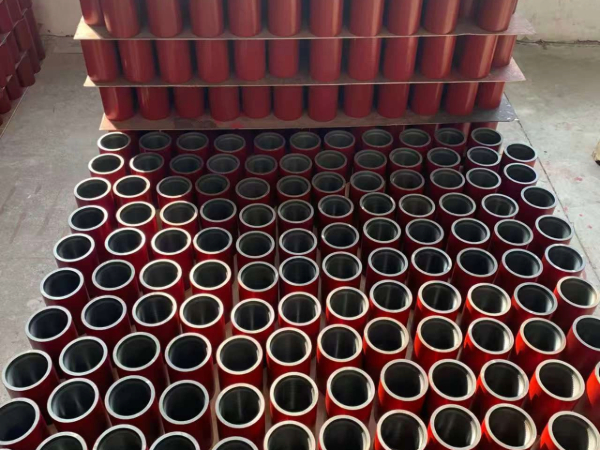
Surface: Whole Phosphating or inside phosphating and outside coating
Thread: NUE, EUE, STC, LTC, BTC, XC, HYDRILL CS
Special Service Sweet Service, Sour Service, Anti-H2S, NACE MR0175/ISO15156
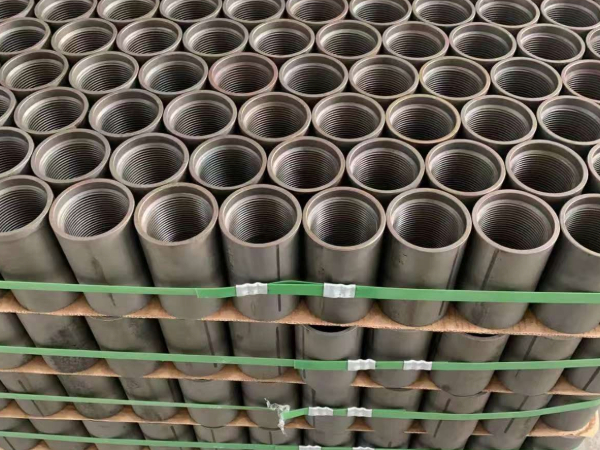
Packing: By carton, wooden case, wooden pallet or requirement of customer
  • Products details
  • Tolerance table
  • Chemical composition
  • Specification

Specification of Tubing And Casing Coupling

Product:

Casing and Tubing Coupling, Casing Coupling, Tubing Coupling

Application:

Used for connect 2 joints of tubing or casing

Size:

Tubing Coupling : 1.8/9 -  4-1/2''

Casing  Couping :  4-1/2'' - 13-3/8''

Pipe Standard:

API 5CT and 5B PSL1/PSL2  J55,K55,N80-1,N80-Q,

API 5CT and 5B L80-1,C90, C95,T95, P110, Q125

Surface:

Whole Phosphating or inside phosphating and outside coating

Thread:

NUE, EUE, STC, LTC, BTC, XC, HYDRILL CS

Special Service

Sweet Service, Sour Service, Anti-H2S, NACE MR0175/ISO15156

Packing:

By carton, wooden case, wooden pallet or requirement of customer


Properties of Casing Couplings:
♦ The material of casing couplings is H40, J55, K55, M65, N80-1, N80Q, L80, C95, T95 and P110 grade steel with high quality and good performance;
♦ The outer diameter ranges from 127mm to 365.12 mm;
♦ The casing couplings thread patterns include short round thread, long round thread and buttress thread.

Tubing coupling is a kind of drilling tool available in oil field. Tubing couplings are mainly used in connecting oil pipes. This type of pipe coupling has handled the problem that the existing couplings tend to crack because of stress concentration. The oil pipe ends and the inner wall of the tubing coupling are connected by threads. And the oil pipes and the ends of the tubing coupling have the same type of threads. It is not easy to crack for this type of connection and the connection effect is good. The tubing coupling can avoid the oil well string dropout accident effectively.


Properties of Tubing Coupling:
♦ The material of tubing couplings is H40, J55, N80-1, N80Q, L80, C90, T95 and P110 grade steel with high quality and good performance;
♦ It is mainly used to connect two oil pipes;
♦ The tubing coupling thread patterns include non-upset thread and upset thread;
♦ The outer diameter of tubing coupling ranges from 55.88 mm to 141.3 mm;


API Tubing Coupling

Specification
Size (Pipe OD) (in) 1.900, 2-3/8, 2-7/8, 3-1/2, 4, 4-1/2
Upset Non UpsetExternal Upset
Grade J-55, C-75, L-80, N-80, C-95, P-110
Option Electro-zinc platedPhosphorised


API Casing Coupling

Specification
Size (Pipe OD) (in) 4-1/2, 5, 5-1/2, 6-5/8, 7, 7-5/8, 8-5/8, 9-5/8, 10-3/4, 11-3/4, 13-3/8, 16, 18-5/8, 20
Threading Short Round-Thread Casing (STC)Long Round-Thread Casing (LC)Buttress Thread Casing (BC)
Grade H-40, J-55, K-55, C-75, L-80, N-80, C-95, AS-95, P-110, L80-13CR


Applicable Standards:
API 5CT material for body;
API 5B for API threads;
Premium thread per licensor specifications

  • Process

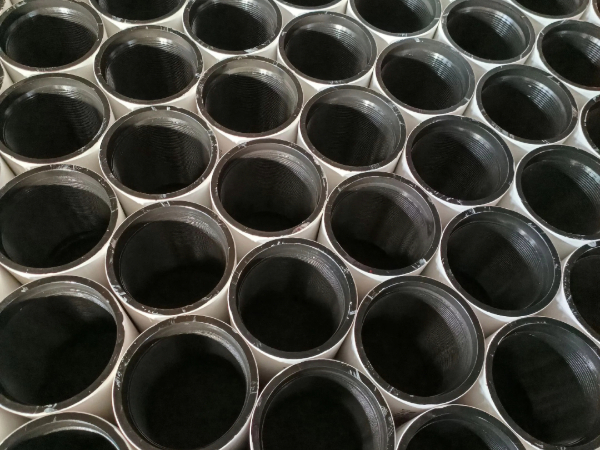
Coupling manufacturing process includes forging, heat treatment, machining, threading, and quality inspection.

  • Tests

Each coupling undergoes dimensional inspection, thread gauge verification, and visual inspection.

  • Packing & Delivery

Couplings are packed in wooden boxes or bundles with rust-proof paper, wrapped with waterproof plastic bags.

  • Tolerance table

API 5CT Coupling Dimension

API Tubing Coupling

Descriptions and size Type of Thread O.D*L Weight
(mm) (kg)
Tubing Coupling 1.05 NUE 33.35*80.96 0.23
1.05 EUE 42.16*82.55 0.38
1.315 NUE 42.16*82.55 0.38
1.315 EUE 48.26*88.90 0.57
1.66 NUE 52.17*88.90 0.59
1.66 EUE 58.88*95.25 0.68
1.9 NUE 55.88*95.25 0.56
1.9 EUE 63.50*98.42 0.84
2-3/8″ NUE 73.02*107.95 1.28
2-3/8″ EUE 77.80*132.82 1.55
2-7/8″ NUE 88.90*130.18 2.34
2-7/8″ EUE 93.17*133.35 2.4
3-1/2″ NUE 107.95*142.88 3.71
3-1/2″ EUE 114.30*146.05 4.1
4″ NUE 120.65*146.05 4.35
4″ EUE 127.00*152.40 4.82
4-1/2″ NUE 132.08*155.58 4.89
4-1/2″ EUE 141.30*158.75 6.05

API Casing Coupling

Descriptions and size

Type of Thread

O.D*L

Weight

(mm)

(kg)

Casing Coupling

4-1/2″

STC

127.00*158.75

5.23

4-1/2″

LTC

127.00*177.80

4.15

4-1/2″

BTC

127.00*225.42

4.55

5″

STC

141.30*165.10

4.66

5″

LTC

141.30*196.85

5.75

5″

BTC

141.30*231.78

5.85

5-1/2″

STC

153.67*171.45

5.23

5-1/2″

LTC

153.67*203.20

6.42

5-1/2″

BTC

153.67*234.95

6.36

6-5/8″

STC

187.71*184.15

9.12

6-5/8″

LTC

187.71*222.25

11.34

6-5/8″

BTC

187.71*244.48

11.01

7″

STC

194.46*184.15

8.39

7″

LTC

194.46*228.60

10.83

7″

BTC

194.46*254.00

10.54

7-5/8″

STC

215.90*190.50

12.3

7-5/8″

LTC

215.90*234.95

15.63

7-5/8″

BTC

215.90*263.52

15.82

8-5/8″

STC

244.48*196.85

16.23

8-5/8″

LTC

244.48*254.00

21.67

8-5/8″

BTC

244.48*269.88

20.86

9-5/8″

STC

269.88*196.85

18.03

9-5/8″

LTC

269.88*266.70

25.45

9-5/8″

BTC

269.88*269.88

23.16

10-3/4″

STC

298.45*203.20

20.78

10-3/4″

BTC

298.45*269.88

25.74

11-3/4′

STC

323.85*203.20

22.64

11-3/4′

BTC

323.85*269.88

28.03

13-3/8″

STC

365.12*203.20

25.66

13-3/8″

BTC

365.12*269.88

31.77

16″

STC

431.80*228.6

34.91

16″

BTC

431.80*269.88

40.28

18-5/8″

STC

508.00*228.60

51.01

18-5/8″

BTC

508.00*269.88

62.68

20″

STC

533.40*228.6

43.42

20″

LTC

533.4*292.10

57.04

20″

BTC

533.40*269.88

50.1

  • Chemical composition
Main Technical Parameters of OCTG Couplings

Couplings

Size in

Max. OD in(mm)

Min length in(mm)

Grade

NU

EU

NU

EU

23/8

2.875(73.03)

3.063(77.80)

41/4(107.95)

47/8(123.83)

J55

N80
L80


27/8

3.500(88.90)

3.668(93.20)

51/8(130.18)

51/4(133.35)


31/2

4.250(108.00)

4.500(114.30)

55/8(142.88)

53/4(146.05)

Crossovers

J55,N80,L80                All kinds of crossovers, connections and sub-couplings of grades J55, N80 and L80

  • Inquiry

Frequently Asked Questions

1. 7" 26 lb/ft BTC coupling — OD and length tolerances, what gate-check picks the duds?

Per API 5CT Table 22: BTC coupling OD tolerance = +3%/‑1%. For 7" BTC (nominal OD 7.656"), the acceptable range is 7.579" to 7.886". Coupling length tolerance = ±1/8" (nominal 10" for BTC). Wall at pin nose: 0.375" minimum.

30-second dock check: gauge OD at both ends with a snap gauge set at 7.579" (low) and 7.886" (high). If too tight to pass the low gauge, or too loose on the high, reject it. Tape the length — 10-1/8" is fine; 10-1/4" means the facing pass was skipped and the coupling won't make torque correctly. Hardness spot-check per Table E.2: P110 max 32 HRC, N80-Q max 25 HRC. Three numbers, thirty seconds, one red flag.

2. API round thread vs Buttress — what's the actual leakage mechanism difference?

Round thread (STC, LTC): the V-profile leaves a controlled 0.002–0.005" clearance between crest and root along the entire helical path. Gas follows that spiral gap to the surface — seal depends entirely on thread compound (API Bul 5A2, 60–75% Zn dust) plugging the leak path. No compound = guaranteed leak above 500 psi.

BTC (Buttress): the thread has a negative flank angle (3° stab flank, 10° load flank) with a flat crest that contacts a flat root when made up. When torqued, the flanks compress and the crest contacts the root — creating a metal-to-metal seal. BTC holds gas at 3,000–5,000 psi without relying on compound. Premium connections go further: they add a separate torque shoulder and a radial metal-to-metal seal that operates independently of the threads, rated gas-tight at ≥95% of pipe body pressure per ISO 13679 CAL IV. You pay for what you need — compound-dependent, metal-to-metal, or independent seal.

3. L80 coupling max 23 HRC — but what does API 5CT actually require across all grades?

API 5CT Table E.2 coupling hardness limits per grade: J55 = not required (as-rolled). N80-1 = not required. N80-Q = max 25 HRC. L80-1 = max 23 HRC with temper ≥621°C. C95 = max 26 HRC. T95 = max 26 HRC plus SSC testing per NACE TM0177. P110 = max 32 HRC. Q125 = max 35 HRC (subgrade-dependent).

The detail most people miss: coupling hardness is measured on the box face — three readings per end, averaged. Coupling body hardness typically runs 2–4 HRC higher than the pipe body because the thicker coupling wall retains heat longer during Q&T. A P110 coupling reading 35 HRC on the box face passes API but fails NACE MR0175. Always check where on the MTC the hardness was taken. If it only says "HRC 32" without a location, ask.

4. API 5CT BTC coupling — can different manufacturers' pins and boxes be interchanged?

API 5CT Section 6.2 plus API Spec 7B-11 say: BTC taper = 0.75 in/ft (0.0625 in/in) with tolerance +0.003/‑0.000. Pitch diameter tolerance = ±0.002" per Table 23. Thread height tolerance = +0.000/‑0.002". In theory, two API-compliant parts from different mills should make up. In the real world, they often don't make up well.

The problem: manufacturing bias. Mill A's pins consistently land at +0.001" on taper; Mill B's boxes at −0.001". The resulting 0.002" gap produces a loose fit that loses 20–30% of seal contact stress. Safe rule: use matched suppliers for new strings. For replacement single joints, always test-make-up one sample before running 100 into the hole. If the torque-versus-turns curve is abnormal — especially a flat plateau or late shoulder — compared to the rest of the string, pull it. One bad connection in a 500-joint string costs far more than the test make-up.

5. 7" 26 lb/ft BTC at 20°C vs 80°C — should make-up torque change?

Yes. Per API RP 5C5 Table A.3, BTC 7" 26 lb/ft make-up torque = 3,450 ft-lb at 20°C. Steel's coefficient of thermal expansion is 11.7 × 10⁻⁶/°C. At a 60°C temperature rise (20°C to 80°C BHST), the axial thermal load on the BTC connection = E × α × ΔT × cross-sectional area = 30 × 10⁶ × 11.7 × 10⁻⁶ × 60 × π/4 × (7.656² − 6.276²) = roughly 28,000 lbs of additional tensile load on the connection.

That 28,000 lbs acts against the compressive preload the make-up torque created — it effectively reduces the effective seal preload. For wells with BHST above 80°C, increase make-up torque by 5–10%: 3,450 × 1.05 = 3,620 ft-lb. For premium connections with separate metal-to-metal seals, follow the manufacturer's temperature-adjusted torque tables. Most call for 3–7% more per 50°C above ambient. Don't guess — calculate, or you risk a gas leak at temperature that was pressure-tested cold.

6. Used coupling after 10 years in a sweet well — re-usable or scrap?

API 5CT Section 14 defines reuse criteria. Run through them in order:

(1) Visual: no cracks, cuts, or corrosion pitting >0.1 mm deep per Table E.4.

(2) Thread gauge: accept if taper and pitch diameter stay within +0.005" of new spec, thread height loss ≤25% per API RP 5C5 §4.

(3) OD: minimum per Table 22 — 7" BTC = 7.579".

(4) Remaining wall at pin nose: ≥90% of new = 0.338" minimum. Below that, crack risk at the stress-relief groove makes it scrap.

(5) Hardness re-check: L80 still ≤23 HRC, P110 ≤32 HRC per Table E.2.

In practice, a coupling from a sweet well with no corrosion history usually passes all five. The thread is always the weak point — if the gauge fails or visual shows tooth wear past 25%, rethread it. Maximum two rethreads per coupling; beyond that, the wall becomes too thin. Re-cert runs $3–5/coupling versus $25–40 new. For established strings, it's worth it. For critical wells, don't recycle — the inspection cost saving is not worth the connection gamble.